
Aluminum Tube Extrusion
The aluminum tube extrusion profile is what we usually called aluminum tubes.
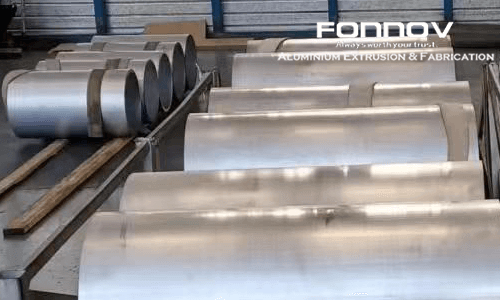
FONNOV ALUMINIUM produces a wide range of aluminum tube extrusions for commercial and industrial use.
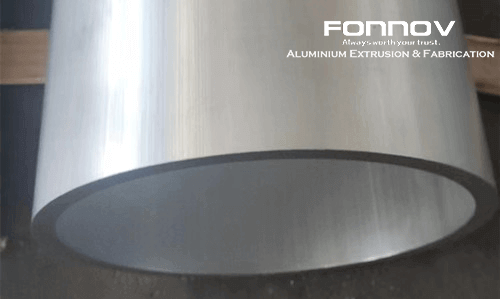
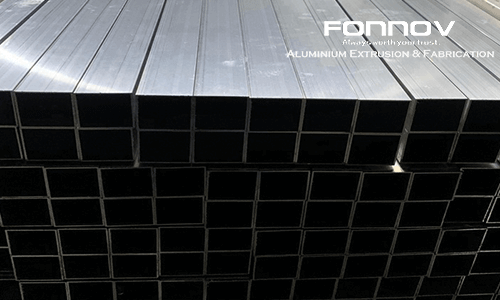
Fonnov can produce round aluminum tubes, square aluminum tubes, rectangular aluminum tubes, hex aluminum tubes, oval aluminum tubes, and we also produce telescopic tubes. Custom shapes also can be produced as per drawing.
Fonnov produce aluminum tubes with alloy 2024, 5083, 6060, 6061, 6063, 6082, 7075, etc.
Fonnov can produce large aluminum tube extrusions as well as small aluminum tubes. We also produce thin wall tubes and thick wall tubes.

FONNOV Aluminum Tube Extrusions For Our Customers



Your Single Source Supplier of Aluminum Tubes

Supply Aluminum Tube Extrusions
For Architecture and General Industries
Aluminum tube extrusions are widely used in construction building, architecture and various industries. According to hardness and strength requirements, we can produce aluminum tubes with different alloys and tempers. If you need aluminum tubes with extra corrosion-resistance or decorative appearance, we can provide more surface treatment processes. Our CNC machining and fabrication service for aluminum tubes can bring you a ready product to use directly.
In architecture, we can see the aluminum tube products everywhere. The suspended ceiling, decorative screens, facade cladding, railings and handrails, curtain poles, seat frames, fences, fence doors, pergolas, soffits, etc.
In various industry, we can also find aluminum tube easily. The piping and pipeline, air storage tubes, hydrogen storage tanks, pressure vessels, drinking strews, structural frames, trims, etc.

Professional Aluminum Tube Extrusion Manufacturer
You Best Choice of Aluminum Tube Extrusion Manufacturer
Do you need standard or custom aluminum tube extrusions for your new project? Or, you want to develop more vendor options for your aluminum tubes?
Search no more. FONNOV ALUMINIUM is the right aluminum tube extrusion manufacturer for this task.
Aluminum Tube Extrusion Mechanical Properties
(Only List Aluminum Alloy 6060 6061 6063 6082 5083 2024 7075)
For the mechanical properties of aluminum seamless tubes, please CLICK HERE.
| Alloy & Temper | Wall Thickness (mm) | Tensile Strength Rm/Mpa |
Yield Strength Rp0.2/Mpa |
Elongation /%
A |
Hardness HBW |
|---|---|---|---|---|---|
| 2024 O, H111 | – | ≤250 | ≤150 | 12 | 47 |
| 2024 T3, T3510, T3511 | ≤15.00 | 395 | 290 | 8 | 120 |
| >15.00-50.00 | 420 | 290 | 8 | 120 | |
| 2024 T8, T8510, T8511 | ≤50.00 | 455 | 380 | 5 | 130 |
| 5083 H112 | – | 270 | 125 | 12 | 70 |
| 6060 T4 | ≤25.00 | 120 | 60 | 16 | 50 |
| 6060 T5 | ≤5.00 | 160 | 120 | – | 60 |
| >5.00-25.00 | 140 | 100 | 8 | 60 | |
| 6060 T6 | ≤3.00 | 190 | 150 | – | 70 |
| >3.00-25.00 | 170 | 140 | 6 | 70 | |
| 6061 T4 | ≤25.00 | 180 | 110 | 15 | 65 |
| 6061 T5 | ≤16.00 | 240 | 205 | 9 | – |
| 6061 T6 | ≤5.00 | 260 | 240 | – | 95 |
| >5.00-25.00 | 260 | 240 | 10 | 95 | |
| 6063 T4 | ≤25.00 | 130 | 65 | 14 | 50 |
| 6063 T5 | ≤3.00 | 175 | 130 | – | 65 |
| >3.00-25.00 | 160 | 110 | 7 | 65 | |
| 6063 T6 | ≤10.00 | 215 | 170 | – | 75 |
| >10.00-25.00 | 195 | 160 | 8 | 75 | |
| 6082 O, H111 | – | ≤160 | ≤110 | 14 | 35 |
| 6082 T4 | ≤25.00 | 205 | 110 | 14 | 70 |
| 6082 T5 | ≤5.00 | 270 | 230 | – | 90 |
| 6082 T6 | ≤5.00 | 290 | 250 | – | 95 |
| >5.00-25.00 | 310 | 260 | 10 | 95 | |
| 7075-T6, T6510, T6511 | ≤25.00 | 530 | 460 | 6 | 150 |
| >25.00-60.00 | 540 | 470 | 6 | 150 |
✣The tested value is Min.
Aluminum Tube Extrusion FAQ
Here are most of the questions related to aluminum tube extrusion. We hope you will find the answer to your question. If not, please leave us a message.
Aluminum has the flexibility to be formed into any shape the manufacturer wants. Bending is a common practice in shaping aluminum. Although, it’s important to understand that some alloys bend better than others.
We produce multiple designs for our clients. That requires creativity and aluminum gives us the freedom to execute that. The design flexibility it offers is out of this world.
Bending is also done in multiple ways including:
- Roller bending
- Press
- Draw
- Stretch bending
We ensure that the alloys and tempers match the bending technique for a successful bend.
Matching Bending Techniques to Alloys/Tempers
You need a proper balance between alloys and bending techniques. Below are some of the factors we consider when bending aluminum tube.
- Formability
Stronger aluminum metal alloys/tempers offer more resistance to bending. This is a result of the indirect proportionality between elongation and strength.
- Thickness and bend radius
The bending process has a lasting impact on aluminum. The process strengthens aluminum and hardens it at the same time. Thicker Aluminum tube is likely to bend less but will regain strength. Before proceeding with bending, we must ascertain that the thickness can withstand the force without breakage.
Bending introduces extra force on the aluminum tube. Once the thickness of the tube accommodates the extra force, bending can be executed successfully. On the other hand, breakage will happen if the force is too much. For that reason, we ensure that the thickness has enough power to withstand the bend we want to achieve.
- Elongation Rate
When bending aluminum tube, the outer diameter is stretched. There are limits to the elongation and we ensure that the limit is not exceeded when bending a tube. As a result, we make properly bent aluminum tubes.
This is a special tubing practice involving one aluminum tube fitting perfectly inside another. When developing this, there must be elaborate clearance between aluminum tubes conjoining. This ensures that they have enough space to move as the user adjusts the telescope. There are various locks that allow you to lock the telescope after extension or vice versa.
It’s also key to note that the lock holds much or less depending on the finish. Anodized finish and powder coated finishing are the most common in telescope aluminum tubing. There’s also an optical element of a telescope. The optical dimensions must be well taken care of. The aluminum tubes ensure this is achieved thanks to its precision and strength.
Aluminum tubes are very common in telescope tubing. They come in different shapes including square, rectangular, and the common round shape. As manufacturer, we’re keen to select the right alloy and wall thickness. We understand that the latter quality is hugely affected by the inner and outer diameters. Therefore, we select the right dimensions for a perfect telescope tube.
Profiled and globe tubes are also designed in multiple sizes by the production team. This variety allows tubing telescopes of all sizes and shapes. Let’s consider some of the aluminum profiles you’ll come across.
Aluminum tubes are used in many industries for different purpose and several roles. Their light weight and corrosion resistance gives the tubes multipurpose suitability. Below are some of the applications of aluminum tubes:
- Sporting tools
A bicycle is made of a frame, tires, and other complementary components. Aluminum tube is used to make the frame because of its strong yet light attributes.
- Marine industry
It is important to remember that aluminum is dominantly used for marine applications because of its great anti corrosion properties. Special structures like boat and ship have been continuously made using aluminum tubes.
- Automotive
The automotive industry is a major consumer of aluminum tubes. They’re used to make exhaust systems and heat exchangers. In other circumstances, they’re used to make suspension components.
- Other industrial applications
Aluminum tubes are used to make supporting frames for huge banners and others in the entertainment scene. Besides, the tubes are important in making electrical conduits, office furniture, structural components, aerospace, in the piping and plumbing industry.
Aluminum tubes are treated to improve their mechanical and other properties. That makes them better performers and more effective. Below are some of the most common finishing methods.
- Painting
Paint adds a coat on top of aluminum that improves its appearance and protects the tube from corrosion. There has been a debate between whether wet painting or powder coating makes aluminum better. Well, the debate is likely to continue! The truth is that both wet painting and powder coating have specific circumstances under which they perform best.
- Anodization
This is a very popular aluminum treatment method that entails oxidizing aluminum in a controlled environment. The other reason why this option is preferred is its colorization superiority.
These ones allow heat treatment as a method to improve their mechanical properties. They become stronger, harder, and with better tempers. Alloys 6xxx, 7xxx, 2xxx, and 8xxx are the most common heat treatable alloys.
Non-heat treatable alloys are produced by mixing Aluminum alloys with other elements. The 1xxx, 3xxx, 4xxx, and 5xxx are the elements and alloys under discussion. After alloying, strain hardening is applied. It is important to note that strengthening alternatives are used on these series because these ones do not respond well to heat treatment.
As an alternative, cold working processes ae applied to improve the mechanical properties of these alloys. Although, these alloys including 1000, 3000, and 5000 are popular for their corrosion resistance and formability.
Aluminum tubes come in different series and alloys. Each of these has special properties that make them suitable for particular applications. Aluminum can also be worked on to produce various shapes. These formations are gotten through mechanical processes like extrusion.
Here are some of the most common alloys:
- 1000 Series (Aluminum alloys)
This is pure aluminum alloy. The minimum aluminum content in these series is 99%. Alloy 1100, 1200, 1035, 1050, 1060 and 1070 are the most common in this group. Their mechanical and physical compositions make them suitable for chemical equipment and sometimes electrical conduction.
- 2000 Series (Copper alloys)
Aluminum and copper combination with amazing strength and commendable toughness. Under this group, popular alloys like 2014, 2017, 2A12, 2024, 2219, 2A11, 2A14 and 2A50 dominate. These two comprise of aluminum and copper as the dominant compositions. This series offers the best alloys for application in the aerospace industry and chemical equipment.
- 3000 Series (Manganese alloys)
Manganese is the dominant alloying element. This series alloys are known for good resistance and have also made a good name as far as formability is concerned. The two common series here include 3003 and 3A12. Both have aluminum and manganese combinations. Besides, they are a great option for cooking utensils. In addition, you can use them for heat exchangers.
- 5000 Series (Manganese alloys)
In this series, manganese and aluminum also dominate. There are three common alloys under this including alloy 5051A, 5083, 5086, 5052, 5154, 5A06, 5454, 5456, 5A02, 5A03, and 5A05. These ones have been applied severally in marine and automotive industries.
- 6000 Series (Manganese and Silicon)
Three elements make up this series including aluminum, magnesium, and silicon. The series works well for applications in structural and architectural industries. Under the 6000 series, it has been established that alloys 6005, 6105, 6005A, 6041, 6042, 6061, 6351, 6082, 6162, 6262, 6064, 6063, 6066 and 6A02 are the most common and frequently used by manufacturers.
- 7000 Series (Zinc and Manganese)
The 7000 series entails aluminum and zinc combinations. Out of them all, the 7075 alloy stands out. The series is a common material in the aerospace and applications that have to withstand high pressure. This series is popular for its fatigue resistance and also high strength.
- 8000 Series (Iron or Lithium)
The 8000 series is a three element combination including aluminum, iron, and silicon. With alloys 8A06 known as the most common, the 8000 series has high electrical conductivity and is applied mostly in electrical conductors.
| Difference | Aluminum Pipes | Aluminum Tubes |
|---|---|---|
| Shape |
|
|
| Thickness |
|
|
| Tolerance |
|
|
| Length |
|
|
| Uses |
|
|
| Endings |
|
|
It is a hollow tube-shaped structure that is made from aluminum extrusion process. The cylindrical formation is applied in multiple industries.
Two of the most significant qualities of extruded aluminum tube are lightweight and corrosion resistance. Besides, aluminum tube is rated excellent in terms of its conductivity properties and has gained massive respect from manufacturers over time thanks to its durability.
Extruded aluminum tubes have 4 major parts defining them. Assuming cylindrical shapes, Aluminum tubes have an Inner Diameter (ID) and Outer Diameter (OD). The difference between these diameters is the wall thickness. The bigger the difference the thicker the wall thickness. Then, there’s the length of the tube. It determines how long the extruded aluminum tube will be.
The structure of an extruded aluminum tube has a big impact on a lot of things. For instance, formability, rate of elongation and ability to bend are significantly affected by ID/OD and the tube’s thickness.

FONNOV ALUMINIUM has full series of tubes for ceiling and wall application.
The maximum width that we can extrude depends on the exact profile shape. Please send us your DWG drawings for brief information on the aluminum extrusion dimensions.
The wider the cross-section, the larger the extrusion press is needed. Our largest capability is with a width of 750mm for some shapes. Many construction companies will be concerned about the maximum width that an aluminum extruder can do. For example, the width of the aluminum formwork usually needs to be at least 300mm.
In cooperation with top institutions in China, we offer and produce aluminum extrusions with a maximum section width of 1100mm. We are working with many famous transportation companies on large-size aluminum extrusions.
We have an aluminum fabrication shop to provide CNC machining and fabrication service.
The material is not only aluminum extrusion products but also aluminum sheet panels. Please send us your CAD and 3D drawings for a quote.
Click Aluminum Machining / Fabrication to know more.

Some countries prefer to use aluminum extrusion with alloy 6060 for production, and some countries perfer to use 6063 instead. The mechanical properties are nearlly the same. Click 6060 VS 6063 to see details of the two popular aluminium alloy for production.

▹Max. L=5800mm for 20 container ( choose 40 container if L>5900mm)
▹Max. L=3000mm for LCL goods by sea (contact shipping agent for goods with L>3000mm, some shipping company accept with a higher cost.)
▹Max. L=2000mm for EXPRESS

▹Bundle Packing
Inside Packing Material: plastic protective film for each piece / plastic bag for each piece / none (optional)
Outside Packing Material: bundles by waterproof craft paper / EPE film / shrink film (optional)
▹Carton Packing
Inside Packing Material: plastic bag for each piece / none (optional)
Outside Packing Material: by carton
▹Wood Pallet Packing
Inside Packing: carton packing
Outside Packing Material: wood pallet
▹Plywood Case Packing
Inside Packing: bundle packing
Outside Packing Material: plywood case
Different temper is with different mechanical properties and prices, as well as different requirement in application. Click 6063T5 VS 6063T6 to see the differences of T5 and T6 of 6063 aluminum alloy, which can help you to select the material that you need for production.
Batch Production: 20-25 days after sample confirmed & down payment received.
▹Drawing is necessary. CAD drawing for aluminum extrusion request. CAD and 3D drawing for machining and fabrication request.
▹Required quantity / aluminium alloy and temper / surface finishing / dimension tolerance / quality standard.
The information above is all needed for the price. Please let us know more about your aluminum project.
Browse FONNOV Aluminium Categories
Standard & Custom Aluminum Extrusions
Custom Aluminum Extrusions For General Industries
Custom Aluminum Extrusions For Architecture
Aluminum Tube Extrusion Manufacturer in CHINA
FONNOV ALUMINIUM is one of the leading aluminum tube extrusion profile manufacturers and suppliers in China. We also provide value-added CNC machining, fabrication and assembly service for your aluminum tubes and aluminum seamless tubes.
Reach out to us now so we can help you in producing your ideal aluminum tubes and aluminum seamless tubes.
 EN
 ES
 RU
 AR